My role
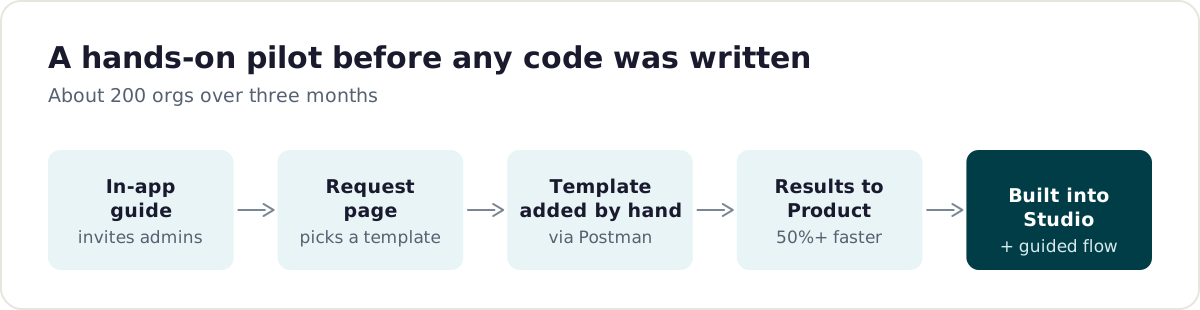
I led the pilot for guided campaign creation and campaign templates. I designed the in-app path into the pilot, my team set up each template by hand, and we presented the results to Product and Technology.
The problem
Campaign Studio’s flexibility is one of its strengths, but it intimidated new admins. Many created a campaign and then sat on it for days before publishing, so donations started late.
Templates could help but they didn’t exist in the product yet, and the team needed evidence before building them.
What I did
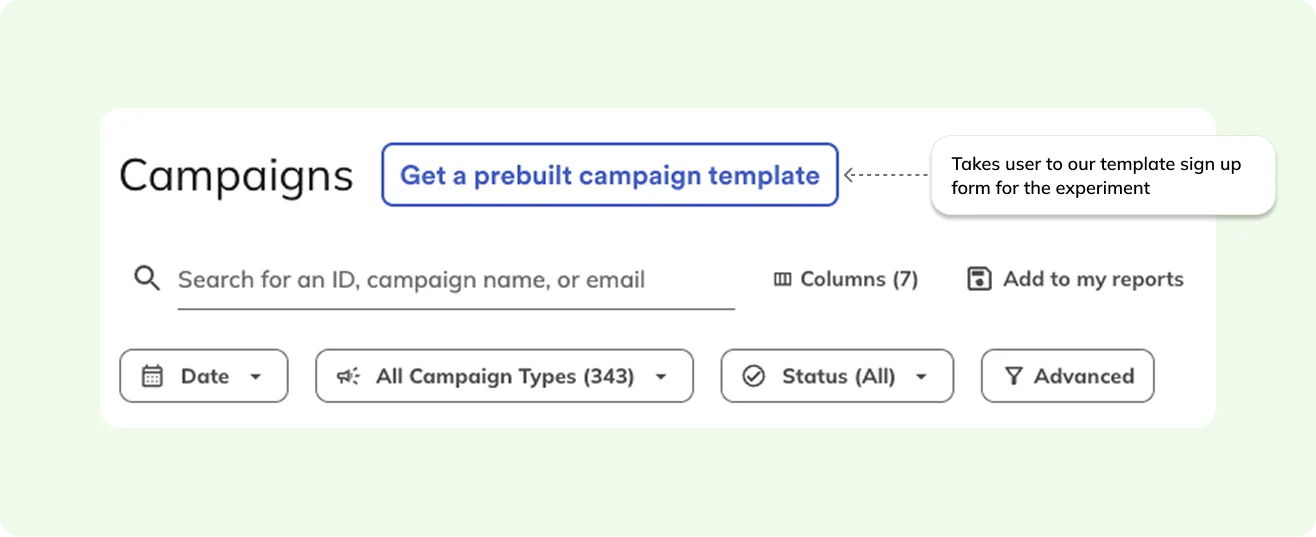
- Ran the pilot by hand. An in-app guide led eligible admins to a page where they could request a template. My team then added it to their account manually, in batches, using a Postman runner.
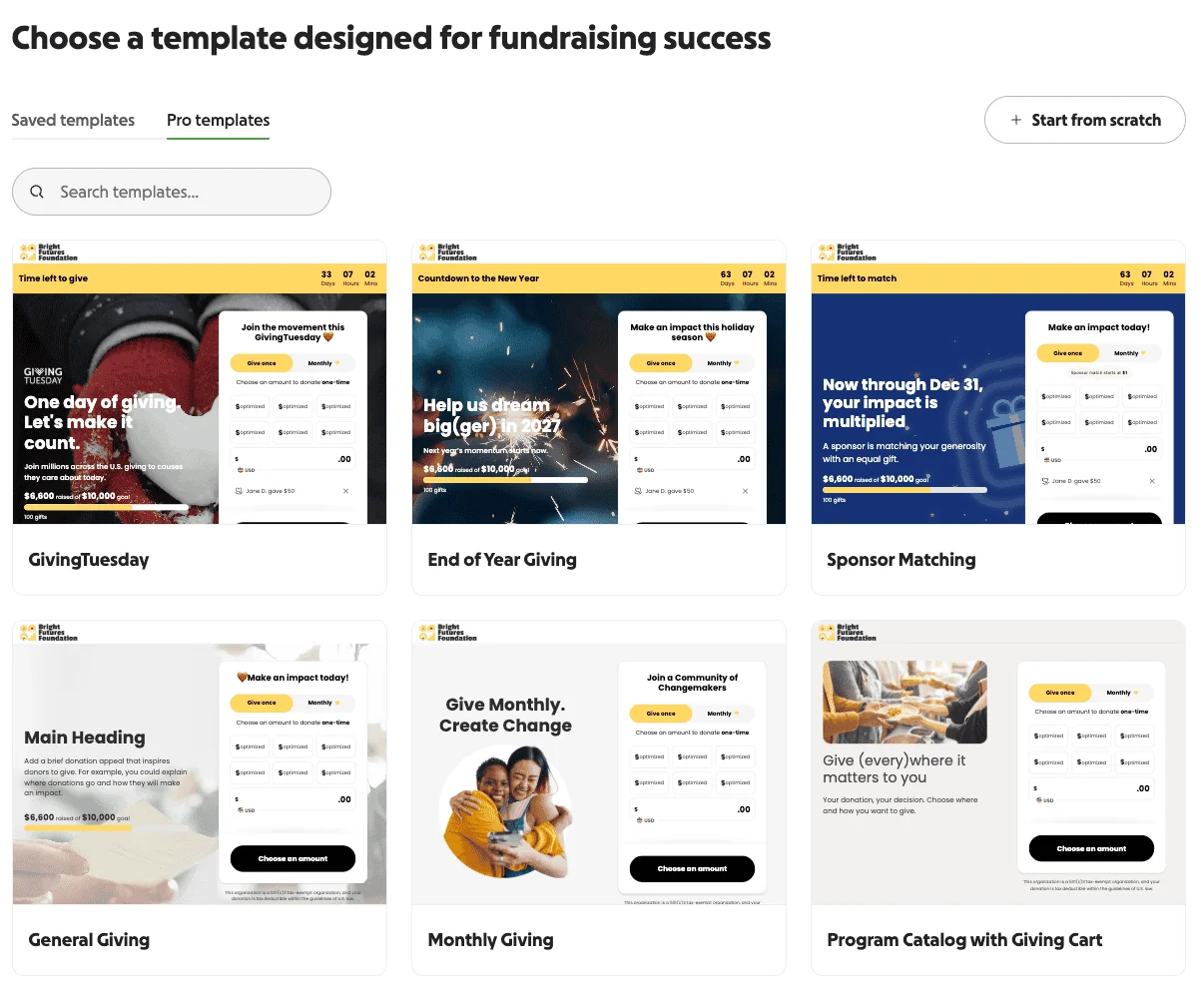
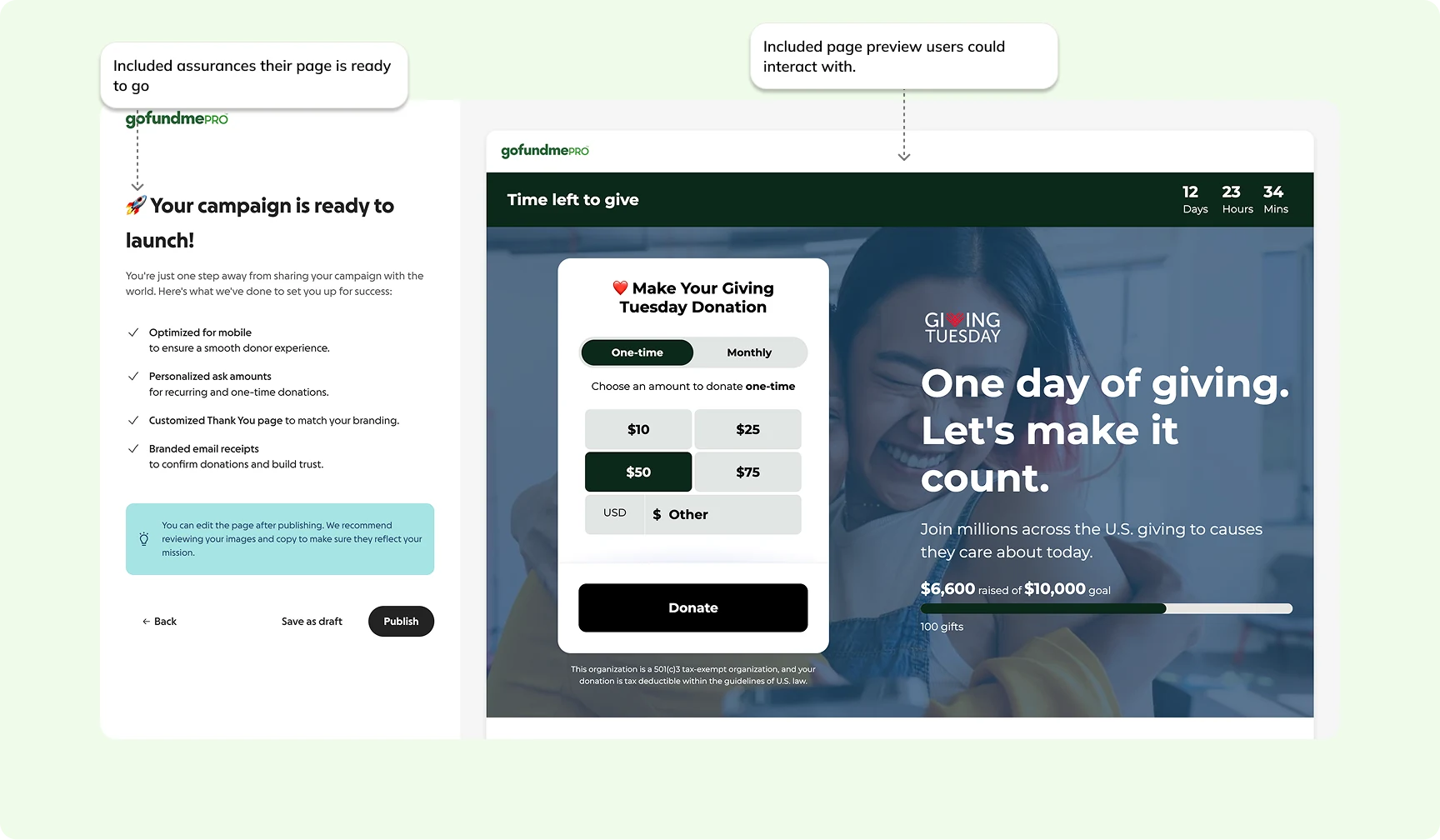
- Built each template around one fundraising need, with best-practice layout, messaging, and settings already in place: general giving, monthly giving, emergency relief, in honor or memory, GivingTuesday, and year-end.
- Measured time to activation, not just requests — then took the results to Product and Technology.
Results
- About 200 organizations joined over three months.
- Pilot campaigns reached activation more than 50% faster — in under a week.
- Product and Technology prioritized building templates and a guided creation flow into Studio.
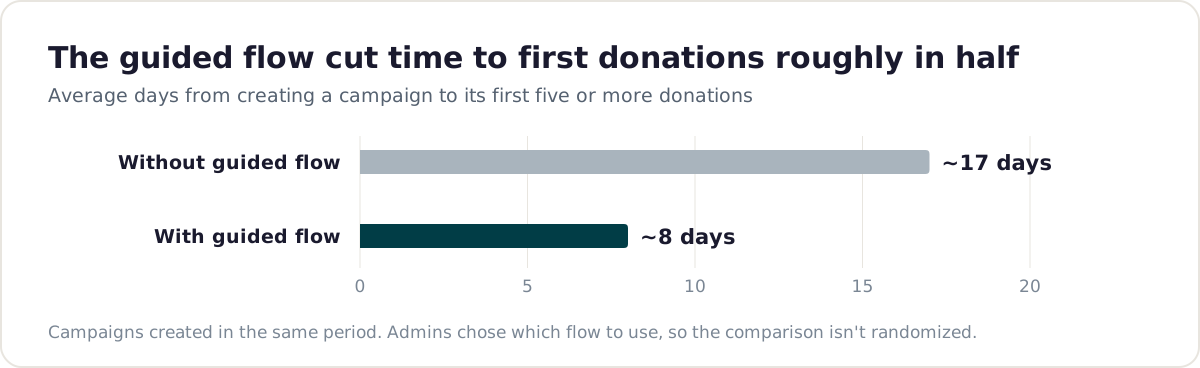
- Once built, campaigns created with the guided flow published about 5x faster, were about twice as likely to publish the same day, and reached their first meaningful donations about twice as fast (around 8 days versus 17).
Admins opted into the pilot, and the later comparison wasn’t randomized either. The direction was consistent across both stages.
What I learned
A small manual pilot is the cheapest way to earn a product investment. Doing it by hand first proved both demand and value before engineering committed to building it.